
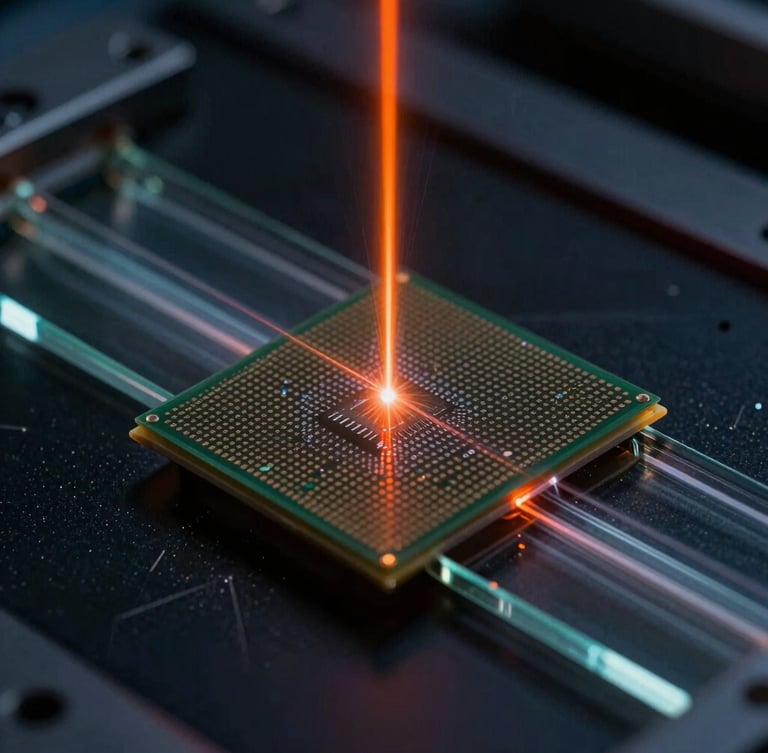
■ Exploring photonic compute architectures at the physical layer
Towards optical and photonic computation models
AARUNI X is an early-stage research initiative exploring compute architectures beyond traditional silicon scaling limits, focusing on photonic and optical system concepts for high-throughput AI computation.
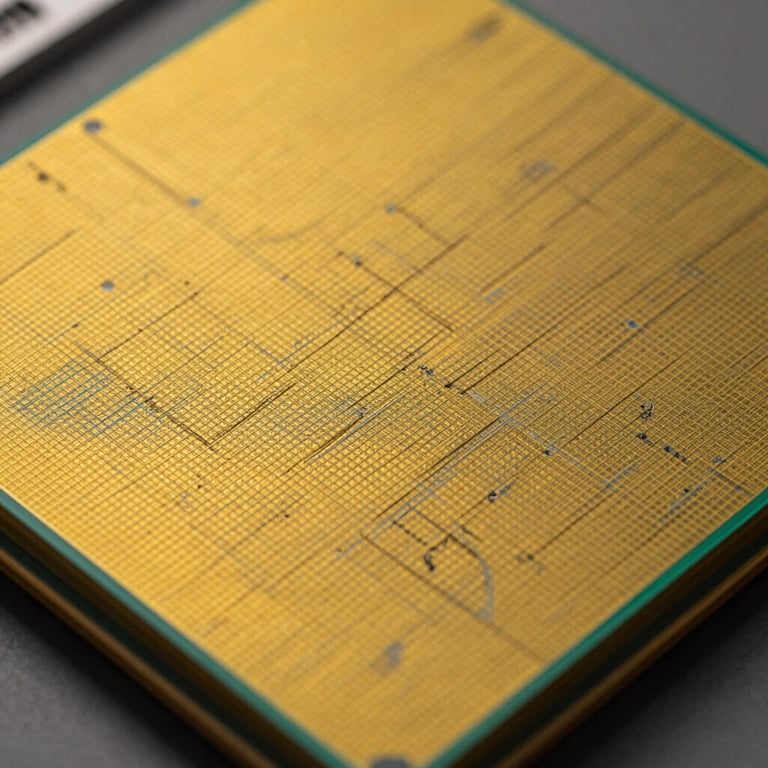
Thermal constraints in silicon architectures
Refractive computing architecture
We are exploring representations of computational workloads and neural network operations in optical and photonic systems.
Traditional electronic architectures face thermal and scaling constraints under large-scale AI workloads. This work explores optical and photonic computation as alternative approaches to reducing energy consumption and interconnect bottlenecks.
We are exploring compute architecture designs focused on improving scalability and efficiency for future AI infrastructure systems.
CONCEPTUAL ARCHITECTURE NOTES
AI workload modeling research
Conceptual performance studies
Early-stage modeling
System-level exploration
Optical routing is being studied as a potential mechanism for parallel computation in photonic systems, particularly for matrix-heavy AI workloads.
Photonic and optical approaches are being evaluated for their potential to reduce energy transfer losses and thermal constraints in future compute architectures.
We are exploring how neural network structures could be mapped onto non-traditional compute substrates, including optical representations.
Research Inquiry
Submit interest in compute architecture exploration
We are engaging in early-stage research conversations around future compute systems.